You Don’t Need a Better Logo. You Need a Clearer Point of View.
You Don’t Need a Better Logo. You Need a Clearer Point of View.
There’s a reason people don’t compare every option equally, even when they think they are. On the surface, it looks like a rational process, features, pricing, experience, design, everything evaluated side by side. But most decisions are made much earlier than that. Not through analysis, but through recognition. Something feels right. Something makes sense faster. Something aligns before it ever needs to be explained. That’s what creates preference.
And preference doesn’t come from having a better logo or more polished visuals. It comes from having a clearer point of view. A point of view tells people how to interpret what they’re seeing. It gives context to the visuals, direction to the messaging, and meaning to the overall experience. Without it, everything might look refined, but it doesn’t fully land. It becomes something people notice, but not something they choose.

We’ve seen this in brands that were already doing everything right on the surface. With J Young Corp, the expertise was clear, the work was strong, and the services were well established. But the way the brand was being presented didn’t immediately communicate why it mattered or how it should be understood within its space. It existed, but it didn’t take a position. And without that position, people had to interpret it on their own, which often leads to hesitation rather than confidence.

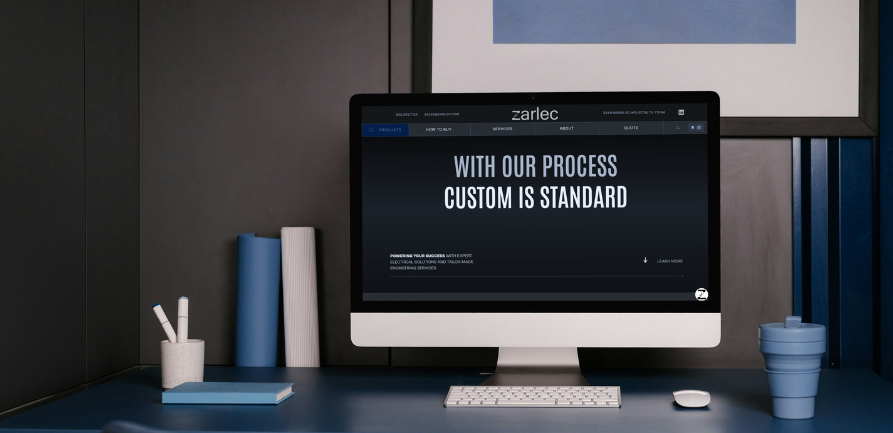
A similar pattern showed up in a different way with Zarlec. The business itself was complex, layered, and technically strong, but without a clear point of view guiding how that complexity was presented, the experience became harder to move through. It wasn’t just about organizing information, it was about deciding what mattered most and how it should be understood. Because clarity isn’t just about simplifying. It’s about emphasizing the right things in the right way.
A strong point of view creates that emphasis. It determines what a brand highlights, what it leaves out, how it communicates, and how it stays consistent over time. Without it, brands tend to expand without direction. They try to say more, show more, include more, hoping something will resonate. But the more they add, the less defined they become. That’s when design starts carrying too much weight, expected to differentiate something that hasn’t been clearly defined underneath.
But visibility isn’t the same as meaning. You can recognize something without understanding it, and you can notice something without choosing it. That gap is what a clear point of view closes. When a brand knows exactly what it stands for, everything else becomes sharper. The messaging feels more direct, the visuals feel more intentional, and the overall presence feels more grounded because it’s built around something specific rather than trying to appeal to everything at once.
That specificity is what creates distinction. Not just in how a brand looks, but in how it’s remembered and chosen. Because people don’t decide based on what looks best in isolation. They decide based on what makes the most sense to them in the moment, what feels aligned, what feels clear, what feels easy to trust without needing to overanalyze.
That’s what a point of view does. It removes the need to figure things out. It makes the decision feel obvious. And once that happens, everything else, design, messaging, execution, starts working the way it’s supposed to. Not as the reason someone chooses you, but as the reinforcement of something they already understand.
